

Same-Day Relief When You Can't Wait

If you’re reading this right now, there’s a good chance you’re in real pain. Not the dull kind you’ve been managing for a few days. The kind that woke you up at 3 am. The kind that’s making it impossible to think about anything else. That’s what a dental emergency feels like, and it’s exactly the situation Jupiter Dentistry is equipped to handle, same day, for patients throughout Jupiter, Tequesta, Juno Beach, and Palm Beach Gardens.
An emergency root canal sounds intimidating. Most people’s fear of the procedure is worse than the procedure itself. What it actually does is simple: it removes the source of your pain. When the nerve inside a tooth becomes infected or dies, no amount of ibuprofen is going to fix it. The infection needs to be cleaned out, and the sooner that happens, the better the outcome.
Call our emergency dentist in Jupiter today at (561) 575-5599.
Don’t Spend Another Night in Pain
Dental pain has a way of escalating quickly. What starts as sensitivity to cold can become constant throbbing within days. What starts as a dull ache can become agony that radiates into your jaw, ear, or temple. That progression isn’t random; it’s your tooth telling you the infection is spreading and needs attention now.
The most important thing you can do right now is call Jupiter Dentistry at (561) 575-5599. We reserve time in our schedule for dental emergencies, and we’ll do everything we can to see you the same day. If you’re calling after hours, follow the instructions on our voicemail for emergency guidance.
While you’re waiting to be seen, here’s what can help:
- Rinse your mouth gently with warm salt water; a teaspoon of salt in a glass of warm water. This helps reduce swelling and keeps the area clean.
- Hold a cold compress against the outside of your cheek in 20-minute intervals.
- Take an over-the-counter pain reliever like ibuprofen (if you can tolerate NSAIDs) — it reduces both pain and inflammation. Avoid putting aspirin directly on your gum tissue, which can irritate and burn the soft tissue.
- Avoid hard, crunchy, sticky, or very hot and cold foods until you’ve been treated.
These steps won’t cure the problem, but they’ll help you get through the next few hours.
How Do You Know if You Actually Need a Root Canal?
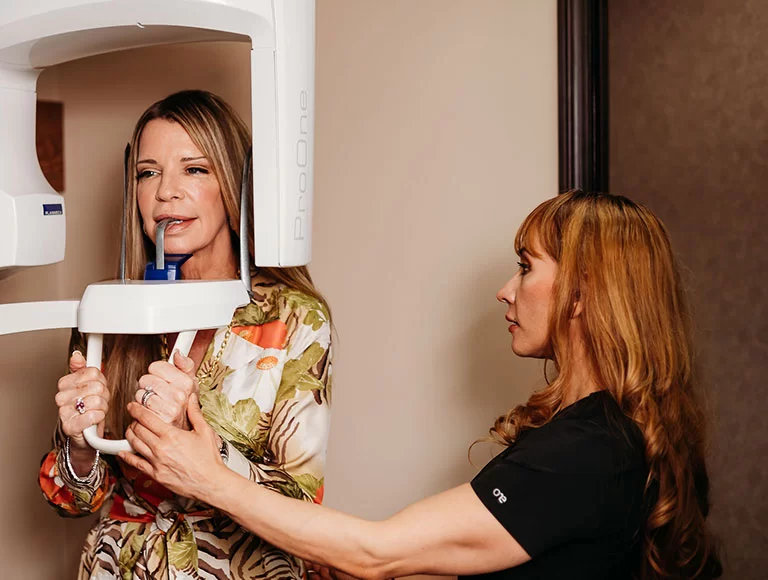
Not every toothache is a root canal situation. Some severe-feeling pain turns out to be a cracked tooth, a deep cavity that hasn’t reached the nerve yet, or a gum infection that needs a different kind of treatment. The only way to know for certain is with an exam and X-rays.
That said, there are specific symptoms that strongly suggest the nerve inside your tooth has been compromised:
- Persistent, throbbing pain that doesn’t let up. If your tooth hurts constantly, not just when you bite down or drink something cold, but on its own, without any trigger, that’s a sign the nerve is inflamed or infected. Pain that keeps you up at night falls into this category.
- Sensitivity to heat that lingers. Cold sensitivity is common and doesn’t always mean a root canal. But if heat makes the pain worse, or if sensitivity to either temperature persists for more than a few seconds after the source is removed, the pulp (the living tissue inside your tooth) is likely involved.
- A darkened tooth. When a tooth turns gray or brownish, it often means the nerve inside has died. This can happen after trauma, a hit to the face, a fall, or even an old injury you forgot about. The discoloration can appear weeks or months after the event.
- Swelling in your gums, face, or jaw. A pimple-like bump on the gum near a painful tooth is a fistula, a channel your body has created to drain infection. Visible swelling in your face or jaw is more serious and can indicate an abscess that’s spreading. Facial swelling from a dental infection should be evaluated the same day, without exception.
- A bad taste or smell you can’t place. Infection has a distinct taste and odor. If you’re noticing something off that you can’t trace to food, it may be coming from an abscess draining.
If you’re experiencing any combination of these, especially swelling alongside pain, don’t wait. Call (561) 575-5599 now.
What Happens if You Wait?
This is the question patients ask most often after the fact: “What would have happened if I’d put this off another week?”
Dental infections don’t resolve on their own. The bacteria causing the infection will continue spreading, first through the tooth’s root system, then into the surrounding bone, and eventually into the soft tissue of your face and neck. A localized dental abscess can become a serious, life-threatening medical emergency if it’s left untreated long enough.
On a more immediate level, waiting almost always means more extensive treatment. A tooth that could have been saved with a root canal today may need to be extracted in two weeks. Bone loss around the root can develop within days of a spreading infection. And the longer the infection is present, the harder it can be to get fully numb, which is why some patients who have waited report that their procedure was more uncomfortable than it should have been. Speed matters. Jupiter Dentistry’s same-day emergency availability exists for exactly this reason.
What Emergency Root Canals Look Like

Here’s the honest, step-by-step picture of what happens when you come in for an emergency root canal:
- Step 1: Diagnosis. We take X-rays of the affected tooth to see the root structure, identify the infection, and confirm that a root canal is the right treatment. This takes about 10 to 15 minutes and tells us everything we need to plan the procedure accurately.
- Step 2: Getting you numb. We use local anesthesia to make the entire area completely numb before we do anything else. Most patients are surprised by how comfortable the procedure is once the anesthesia has taken effect. If dental anxiety is a concern, let us know when you call. We have options to help you feel more at ease.
- Step 3: Removing the infected pulp. We create a small opening in the top of the tooth and use specialized instruments to remove the infected or dying nerve tissue from inside the tooth’s canals. The canals are then cleaned, shaped, and disinfected.
- Step 4: Sealing the tooth. Once the canals are clean, we fill them with a biocompatible material called gutta-percha and seal the opening. A temporary or permanent filling is placed to close the access point.
- Step 5: The crown (a follow-up appointment). Most teeth that undergo root canal treatment need a crown placed afterward to protect the tooth, restore its full strength, and prevent fracture. This is typically scheduled as a separate appointment once the tooth has had time to settle.
The procedure itself takes approximately one to two hours, depending on the complexity of the case, the number of canals, the degree of infection, and the anatomy of the tooth. Most patients leave the appointment feeling significantly better than when they arrived. The infection is gone. The nerve pressure is relieved. The throbbing stops.
Your Recovery
The area around the tooth will likely be sore for a few days after treatment. This is normal, and it’s very different from the pain you had before. Your body is healing. That soreness responds well to over-the-counter anti-inflammatories like ibuprofen taken on a regular schedule (as directed) for the first 48 to 72 hours.
To support healing:
- Stick to soft foods for a few days; think yogurt, eggs, soup, smoothies.
- Avoid chewing on the treated side until your crown is placed. Keep up with brushing and flossing, but be gentle around the treated area.
- Avoid smoking or tobacco use, which slows healing significantly.
Most patients return to normal activity the next day. If you were in significant pain before the procedure, many people find themselves sleeping better the night after treatment than they have in weeks.
Call us immediately if you experience:
- Pain that is getting significantly worse after the first 48 hours, rather than gradually improving
- Visible swelling in your face or jaw that is increasing
- Fever, chills, or feeling generally unwell
- The temporary filling is coming out
These symptoms may indicate that additional treatment is needed, and we want to hear from you right away.
Jupiter Dentistry Financing and Insurance
Emergency root canals vary in cost depending on which tooth is involved (front teeth have fewer canals than molars), the complexity of the case, and whether a crown will be needed afterward. We’ll give you a clear breakdown of expected costs before we begin any treatment.
- Insurance: Many dental insurance plans cover a portion of root canal therapy, particularly when it’s medically necessary, which an infected tooth always is. Coverage for the crown may be separate. We recommend calling your insurance provider before your appointment to ask about your specific root canal benefit and any deductible that applies. Our team can also assist you in understanding your coverage during your visit.
- Financing: If you’re uninsured or your coverage doesn’t cover the full cost, we offer financing options to make emergency care accessible. We don’t want cost to be the reason you put off treatment that your health depends on.
Frequently Asked Questions
-
Is an emergency root canal painful?
The procedure itself, once you’re fully numb, should not be painful. Most patients are genuinely surprised by how comfortable it is. The anticipation is usually worse than the reality. What you’ll feel during the procedure is pressure and movement, not pain. If you feel anything sharp at any point, tell us, and we’ll add more anesthesia. Your comfort matters, and we won’t proceed until you’re numb.
-
What are the risks of delaying a root canal?
The infection will spread. What starts as a localized abscess inside the tooth can move into surrounding bone, adjacent teeth, and soft tissue. In serious cases, dental infections spread to the throat, neck, or jaw — a condition that requires hospitalization. There is also a real risk of losing the tooth entirely if the infection damages the bone supporting it. Early treatment is always less invasive, less expensive, and safer.
-
What if my tooth has to be extracted instead?
If the infection has caused too much structural damage, extraction may be the better option. We’ll always be transparent with you if that’s the case. If a tooth does need to come out, we’ll discuss replacement options, including dental implants, so you have a clear path forward.
Don’t Wait in Pain, Call Jupiter Dentistry
Jupiter Dentistry sees emergency patients from throughout Jupiter, Tequesta, Juno Beach, Palm Beach Gardens, and northern Palm Beach County. Same-day appointments are available for dental emergencies. The sooner you call, the sooner you feel better. (561) 575-5599.

Complimentary Consultation
or 2nd Opinion
- Exam
- Full mouth X-rays
- Private Consultation with Doctor ($350 value)
 2151 FL A1AAlt #1300,
Jupiter, FL 33477 (561) 575-5599
- Monday: 8am - 5pm
- Tuesday: 8am - 5pm
- Wednesday: 8am - 5pm
- Thursday: 8am - 5pm
- Friday - Saturday - Sunday: Closed