 Skip to content

Jaw Pain Doesn't Have to Be Your Normal

The jaw pain started small. A click when you open your mouth wide or some tightness in the morning. Maybe you blamed headaches on stress or bad sleep. But the symptoms kept stacking up with a dull ache near your ear, neck tension that won’t quit, and teeth that are starting to look worn. If any of this sounds familiar, you may be dealing with TMJ disorder.
TMJ disorder is more common than most people realize. The temporomandibular joint, the hinge that connects your jaw to your skull, is one of the most frequently used joints in your body. When it’s not functioning properly, the effects ripple outward in ways that are easy to misattribute to something else. Patients come to Jupiter Dentistry after seeing their primary care doctor for headaches, their ear doctor for ringing ears, and their chiropractor for neck pain, only to find that the jaw was the common thread all along.
At Jupiter Dentistry, Dr. Jay Ajmo has helped patients throughout Jupiter, Tequesta, Juno Beach, Jupiter Farms, and Jupiter Island find real, lasting relief from TMJ symptoms. To schedule a consultation, contact our dental offices in Jupiter today at (561) 575-5599.
The Jaw Pain You Keep Dismissing Is Worth Taking Seriously
Most people who have TMJ disorder don’t realize that’s what they have. The symptoms are spread across the head, neck, jaw, and ears, and they often develop slowly enough that patients adapt around them. They stop eating certain foods, they sleep on a different side, or they even take more over-the-counter pain relievers than they’d like to admit.
If this is you, the frustration is valid. TMJ disorder is frequently misdiagnosed or dismissed as stress. But the jaw joint is mechanical; when something is off with how it moves, that misalignment puts strain on the surrounding muscles, nerves, and tissues. That strain doesn’t resolve on its own. It accumulates.
The good news is that most cases of TMJ disorder respond well to conservative treatment, and many can be addressed right here in our Jupiter dental office without surgery or long-term medication.
Symptoms of TMJ Disorder Jupiter Patients Describe Most Often
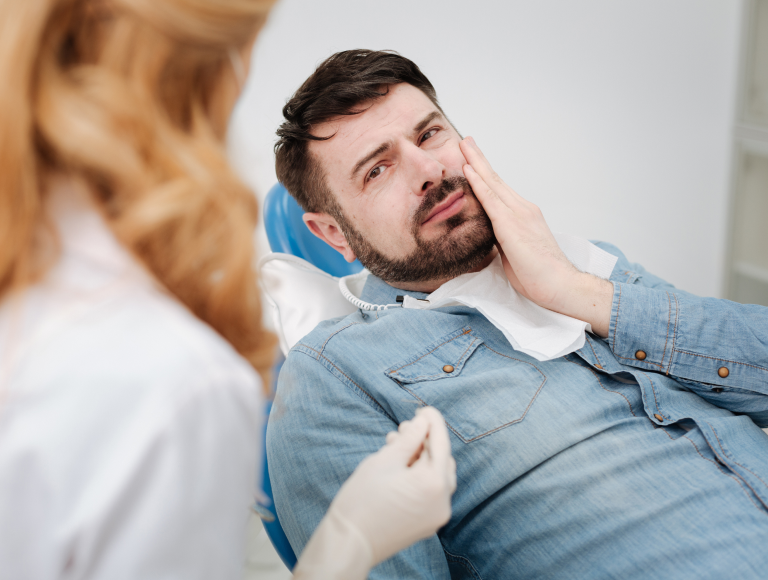
TMJ disorder presents differently from person to person. Some patients come in primarily because of jaw pain. Others have no jaw pain at all; their main complaint is headaches or a clicking sound that’s getting louder. Their dentist refers to some after showing signs of significant tooth wear.
Symptoms to watch for include:
- Jaw pain or soreness, especially in the morning or after meals
- Clicking, popping, or grinding sounds when opening or closing the mouth
- Difficulty opening the mouth fully or a jaw that feels locked or stiff
- Chronic headaches, especially tension headaches across the temples
- Earaches or a sensation of fullness in the ears without an ear infection
- Tinnitus — a persistent ringing or buzzing in the ears
- Neck and shoulder pain with no clear musculoskeletal cause
- Facial pain or fatigue around the cheeks and jaw muscles
- Teeth that appear worn down, chipped, or flattened
- Increased tooth sensitivity, particularly to temperature
Not every patient has all of these symptoms, and not every patient with these symptoms has TMJ disorder. That’s why a proper evaluation matters. Dr. Ajmo takes a thorough approach, examining your bite, your jaw movement, the condition of your teeth, and your symptoms as a whole before recommending any treatment.
What's Actually Causing Your TMJ Pain?
TMJ disorder doesn't have a single cause. It's usually the result of several factors working together, and identifying which ones apply to your situation is the first step toward effective treatment.-
Bruxism (Teeth Grinding and Clenching)
This is one of the most frequent culprits we see at our Jupiter practice. Many people grind or clench their teeth during sleep without knowing it; the only evidence is worn enamel, jaw soreness in the morning, and a partner who mentions the sound. Bruxism puts enormous sustained pressure on the TMJ and the surrounding muscles, and over time, that pressure causes real damage.
-
Bite Misalignment (Malocclusion)
When your upper and lower teeth don’t come together properly, your jaw has to compensate every time you chew, swallow, or speak. That compensation, done thousands of times a day, strains the joint and the muscles that control it.
-
Stress and Muscle Tension
Stress causes many people to hold tension in their jaw, often unconsciously. This can increase grinding and clenching behaviors, reduce blood flow to the area, and make existing TMJ symptoms significantly worse. Patients in stressful careers or life situations often notice their TMJ flares during particularly demanding periods.
-
Injury or Trauma
A blow to the jaw, a whiplash injury, or even extensive dental work that kept the mouth open for a long period can trigger TMJ disorder in some patients. The joint is vulnerable to trauma just like any other joint in the body.
-
Arthritis
Both osteoarthritis and rheumatoid arthritis can affect the temporomandibular joint, particularly in older patients. If the cartilage within the joint deteriorates, the result is pain and reduced range of motion.
TMJ Treatment Options at Jupiter Dentistry
-
Custom Nightguards & Occlusal Splints
For patients whose TMJ disorder is driven by bruxism or bite misalignment, a custom nightguard is often the cornerstone of treatment. Unlike over-the-counter guards from the pharmacy, our nightguards are fabricated from precise impressions of your teeth. They fit exactly, distribute bite force evenly across the jaw, and prevent the teeth from making the damaging contact that occurs during grinding.
An occlusal splint works on a similar principle but may be worn during the day as well, depending on when your grinding or clenching behaviors are most active. Many patients experience a dramatic reduction in morning jaw pain and headaches within the first few weeks of consistent use.
-
Bite Adjustment & Equilibration
In some cases, the root cause of TMJ disorder is a bite that simply doesn’t fit together correctly. Minor reshaping of specific tooth surfaces, a process called occlusal equilibration, can eliminate the interference points that are stressing the joint. This is a conservative procedure performed in the office and often brings meaningful relief.
-
Restorative Dental Work
If TMJ disorder has caused significant wear on your teeth, or if existing dental restorations have altered your bite in a way that contributed to the problem, restorative work may be part of the solution. Dental crowns can rebuild worn tooth surfaces and restore proper bite height.
For patients with more extensive damage, a full-mouth reconstruction addresses the bite comprehensively, correcting the underlying structural issues rather than managing symptoms indefinitely.
-
Lifestyle Recommendations
Alongside in-office treatment, we help patients develop habits that support healing and reduce the daily stress on the joint. This typically includes:
- Eating softer foods during flare-ups to reduce jaw load
- Applying warm compresses to relax the surrounding muscles
- Avoiding habits that strain the joint, like chewing gum, biting fingernails, or resting the chin on a hand
- Jaw stretching and relaxation exercises
- Stress management strategies for patients whose symptoms are tied to anxiety and tension
-
Referrals for Specialized Care
Some cases of TMJ disorder require care beyond what a dental office can provide, including physical therapy, oral and maxillofacial surgery, or pain management. Dr. Ajmo maintains relationships with trusted specialists in the Palm Beach area. If your case warrants a referral, we’ll connect you with someone whose philosophy aligns with ours: conservative, thorough, and patient-centered.
When TMJ Disorder Affects More Than Just Your Jaw
One of the reasons TMJ disorder goes undiagnosed for so long is that its effects often show up far from the jaw itself. Patients live with symptoms for years, treating each one in isolation, without recognizing the common source.
Chronic headaches that don’t respond to typical treatments. Ear pain that every ENT says is unrelated to the ear. Neck and shoulder tightness that comes back no matter how many times you stretch or see a chiropractor. Sensitivity in teeth that have no cavities and no obvious damage.
If you’ve been chasing these symptoms without lasting relief, the TMJ is worth investigating. We’ve seen patients in Jupiter and across Palm Beach County experience significant improvements in quality of life after addressing a TMJ disorder that had been overlooked for years.
Left untreated, TMJ disorder can also cause progressive damage to the teeth. The grinding and clenching that often accompany it wear down enamel, create fractures, and can eventually compromise teeth to the point where more significant restorative work is needed. Addressing the problem early is almost always less complicated and less expensive than addressing it after the damage has accumulated.
For patients already dealing with tooth damage from long-term bruxism, we offer restorative options, including tooth-colored fillings and crowns, through our general and restorative dentistry services.
What to Expect at Your TMJ Consultation in Jupiter
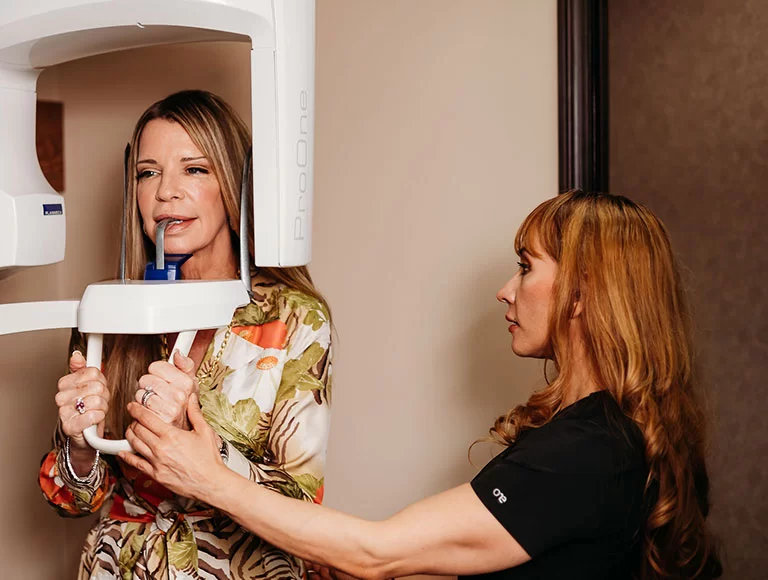
Your first appointment is about understanding, not rushing to a diagnosis. Dr. Ajmo will take time to hear your full symptom history, when the pain started, what makes it better or worse, what you’ve already tried, and how it’s affecting your daily life.
The exam includes an assessment of your jaw movement and range of motion, an evaluation of your bite and how your teeth come together, and a review of your dental X-rays for signs of wear, joint changes, or structural factors that might be contributing. We’ll also look at your existing dental work, since poorly fitting restorations can sometimes play a role in TMJ symptoms.
From there, we’ll explain what we’re seeing in plain language and outline the treatment options that make sense for your situation. If conservative treatment is appropriate, and it usually is, we’ll start there. If your case is more complex, we’ll be honest with you about what that means and what the path forward looks like.
We also offer flexible financing options for patients who are concerned about cost, including our in-house savings plan for those without dental insurance.
Frequently Asked Questions About TMJ Therapy
-
How do I know if my jaw pain is TMJ disorder?
Common signs include jaw pain or soreness, clicking or popping when you open and close your mouth, headaches near the temples, earaches without infection, and difficulty opening your mouth fully. Many patients also notice unusual tooth wear or increased sensitivity. The only way to confirm a TMJ disorder diagnosis is through a clinical evaluation.
-
Can a nightguard really fix TMJ pain?
For many patients, yes, a properly fitted custom nightguard significantly reduces or eliminates TMJ symptoms, particularly when grinding or clenching is the main driver. It works by creating an even surface for the teeth to contact, preventing the clenching pressure that strains the joint and the surrounding muscles. Over-the-counter guards from the pharmacy are not the same; they’re bulky, imprecise fits that can actually worsen symptoms in some cases. Our nightguards are fabricated from precise impressions of your teeth.
-
Is TMJ disorder related to teeth grinding?
Frequently, yes. Bruxism, the clinical term for teeth grinding and clenching, is one of the most common contributors to TMJ disorder. Many people grind their teeth during sleep without realizing it, and the sustained pressure on the jaw joint accumulates over time into pain, muscle fatigue, and tooth damage. If your TMJ symptoms are worse in the morning, bruxism is likely part of the picture. We’ll assess this during your evaluation.
-
Does insurance cover TMJ therapy in Jupiter?
Coverage for TMJ therapy varies significantly by plan. Some dental insurance plans cover nightguards and bite adjustments; others classify TMJ treatment as a medical expense covered under health insurance rather than dental. We’ll help you understand your coverage before beginning treatment. We also offer financing options and our in-house savings plan for patients whose insurance doesn’t cover TMJ care.
Say Goodbye to Jaw Pain
Jaw pain doesn’t have to be your norm. Call Jupiter Dentistry at (561) 575-5599 or schedule your complimentary consultation online. We serve patients throughout Jupiter, Tequesta, Juno Beach, Jupiter Farms, Jupiter Island, and Palm Beach County, Monday through Thursday, 8 am to 5 pm.

Complimentary Consultation
or 2nd Opinion
- Exam
- Full mouth X-rays
- Private Consultation with Doctor ($350 value)
 2151 FL A1AAlt #1300,
Jupiter, FL 33477 (561) 575-5599
- Monday: 8am - 5pm
- Tuesday: 8am - 5pm
- Wednesday: 8am - 5pm
- Thursday: 8am - 5pm
- Friday - Saturday - Sunday: Closed