 Skip to content

Did You Fall Out of Love with Your Smile?
There’s a certain kind of frustration that builds slowly. You don’t remember the exact moment your smile started to change. It happened over the years — the coffee every morning, the grinding at night, the chip you got biting into something you shouldn’t have. Individually, none of it seemed like a big deal. But somewhere along the way, you stopped smiling openly in photos. You started covering your mouth with your hand when you laughed. You noticed it, even if no one else did yet.
If that sounds familiar, you’re not alone, and you’re not stuck with it.
What many patients don’t realize is that the damage they’ve accumulated over the years, the worn edges, the yellowing, the small chips and cracks, is exactly what cosmetic dentistry is designed to address. And in most cases, fixing it doesn’t require anything dramatic, painful, or invasive.
To learn more about our cosmetic dentistry services in Jupiter, FL, contact Jupiter Dentistry today by calling (561) 575-5599.
The Three Most Common Smile Complaints and What Causes Them
1. Worn-Down Teeth
Tooth wear is one of the most common and most overlooked signs of aging in the mouth. It happens through several mechanisms:
- Bruxism (teeth grinding): Many people grind their teeth at night without knowing it. Over the years, this flattens and shortens the biting edges of teeth, making the smile look older and less vibrant. TMJ therapy can help address the underlying cause.
- Acid erosion: Acidic foods, drinks, and acid reflux gradually dissolve tooth enamel, giving teeth a thin, translucent, or glassy appearance at the edges.
- General wear: Simply chewing, biting, and talking for decades adds up. Teeth that once had sharp, defined edges become flat and dull.
Worn teeth are particularly aging. They reduce the length-to-width ratio of your teeth, which, combined with the changes that happen to your face over time, can make you look years older than you are.
2. Staining and Discoloration
Tooth discoloration comes in two forms, and understanding the difference matters when it comes to treatment.
Extrinsic staining occurs on the surface of the enamel and is caused by what you eat, drink, and expose your teeth to: coffee, tea, wine, tobacco, and certain foods like berries or tomato sauce. This type of staining is the most common and generally the most treatable.
Intrinsic discoloration is embedded within the tooth structure itself. It can be caused by aging (as enamel thins and the darker dentin beneath shows through), certain medications taken during development, past dental trauma, or fluorosis. Intrinsic staining doesn’t respond to whitening treatments, and it needs a different approach.
3. Chips, Cracks, and Uneven Edges
A chipped tooth is usually the result of a specific moment, biting down on something hard, a sports impact, or an old filling failing. But uneven, jagged, or asymmetrical tooth edges can also develop gradually through wear and small fractures that accumulate over time.
Beyond the cosmetic concern, chips and cracks can become functional problems if left unaddressed. A small chip can grow. A hairline crack can deepen. What starts as an aesthetic issue can become a structural one, and may eventually require periodontal treatment if the damage progresses to the surrounding tissue.
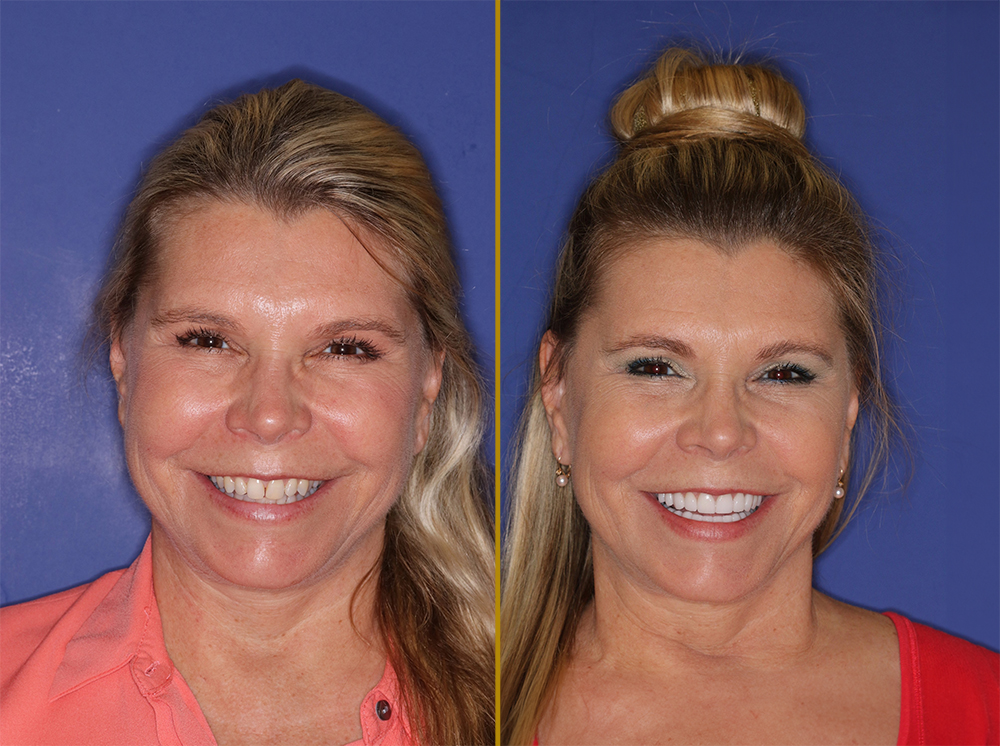
The Cosmetic Dentistry Treatments That Fix These Problems
Porcelain Veneers: The Gold Standard for Comprehensive Smile Transformation
If you have a combination of concerns, staining that doesn’t respond to whitening, worn edges, chips, and slight irregularities, porcelain veneers are often the most elegant solution.
Veneers are ultra-thin, custom-crafted shells of dental porcelain bonded to the front surfaces of your teeth. They can simultaneously correct color, shape, length, and surface texture in just two or three appointments.
The process is far less invasive than most patients imagine. A small amount of enamel, typically less than a millimeter, is gently prepared from the tooth surface to ensure the veneer sits flush and looks natural. Impressions are taken, your custom veneers are crafted in a dental lab, and then bonded precisely into place.
- The result: Teeth that look healthy, natural, and youthful, correcting years of wear and discoloration in a single treatment sequence. Porcelain is also highly stain-resistant, meaning your results hold up beautifully over time with normal care.
Professional Teeth Whitening: The Right Starting Point for Surface Staining
For patients whose primary concern is extrinsic surface staining, the yellowing and dullness that accumulates from years of coffee, tea, wine, and food, professional teeth whitening is often the fastest and most cost-effective place to start.
Unlike over-the-counter whitening products, professional whitening uses prescription-strength bleaching agents that penetrate deeper into the enamel and deliver reliably dramatic results. Patients typically see their teeth lift several shades in a single in-office session or through a customized take-home tray system.
Whitening works on natural tooth enamel and won’t change the color of existing crowns, veneers, or bonding. If you’re planning any restorative work, whitening should typically come first so that new restorations can be matched to your brightened shade.
Dental Bonding: The Quick Fix for Chips and Minor Irregularities
For a single chipped tooth or a small cosmetic imperfection, dental bonding offers a fast, minimally invasive, and affordable solution that often requires no anesthesia and no enamel removal. Tooth-colored composite resin is carefully sculpted onto the affected tooth, shaped to restore the natural contour, and then hardened and polished to match the surrounding teeth. The entire process typically takes less than an hour per tooth.
Bonding is an excellent option for isolated chips, small gaps, slightly irregular edges, or minor color issues on a single tooth. For multiple teeth or more significant concerns, veneers tend to offer a more durable and uniform long-term result, but bonding is a powerful tool in the right circumstances.
Cosmetic Porcelain Crowns: For Teeth That Need Structure and Aesthetics
When a tooth is significantly worn, cracked, or has existing large restorations, a porcelain crown may be the best solution, addressing both the structural integrity of the tooth and its appearance in one step.
Modern dental crowns are made entirely from high-quality porcelain and are virtually indistinguishable from natural teeth. For patients with heavily worn molars or back teeth that have been damaged by grinding, crowns provide the durability needed while restoring the proper height and bite function, which, in turn, protects the front teeth from further wear.
Smile Design and Smile Makeovers: When You Want to Address Everything at Once
For patients with multiple concerns across several teeth, a coordinated smile makeover is often the most efficient path forward. Rather than treating each tooth in isolation, Dr. Ajmo takes a whole-mouth, artistic approach: evaluating your facial proportions, gum line, bite, and overall aesthetic goals to design a comprehensive smile design plan.
A smile makeover might combine whitening, veneers, bonding, and gum contouring, each step complementing the others to create a result that looks cohesive, natural, and uniquely yours. It’s not about creating a cookie-cutter “Hollywood smile.” It’s about crafting the best version of your smile.
What “Minimally Invasive” Really Means in Cosmetic Dentistry
The phrase “minimally invasive” gets used a lot in dental marketing, but what does it actually mean in practice? It means that the best cosmetic dental treatments today are designed to preserve as much natural tooth structure as possible. Advances in bonding technology, ultra-thin veneer materials, and precision lab fabrication mean that dramatic aesthetic improvements can often be achieved with far less preparation than was required even a decade ago.
For most cosmetic procedures at Jupiter Dentistry, patients experience minimal discomfort, require no general anesthesia, and can return to their normal lives the same day. “Major surgery” is simply not part of the equation for the vast majority of cosmetic concerns. What you may have been putting off out of fear or the assumption that the process would be painful and disruptive is, for most patients, surprisingly straightforward.
Why This Matters More Than Aesthetics Alone
It would be easy to dismiss cosmetic dentistry as purely superficial, and many people do, which is part of why they keep putting it off. But research consistently shows that the way we feel about our smiles directly affects our confidence, our willingness to engage socially and professionally, and even our mental health. Patients who address long-standing cosmetic concerns consistently report feeling more confident in social situations, more willing to smile freely, and more satisfied with their appearance overall.
A smile you’re proud of isn’t a luxury. It’s a quality-of-life issue, and it has practical, accessible solutions.
Your Next Step: A Complimentary Consultation in Jupiter, FL
Dr. Jay Ajmo and the team at Jupiter Dentistry offer complimentary consultations for new patients considering cosmetic treatment. This is a no-pressure conversation, an opportunity to share your concerns, see what’s possible, and understand exactly what a customized treatment plan would look like for you.
Whether you’ve been dealing with years of wear, stubborn staining, an old chip you’ve just learned to live with, or all of the above, there’s a solution that fits your situation, and most likely, it’s simpler than you think.
Call our cosmetic dentist in Jupiter today at (561) 575-5599 for your personalized consultation.