
You’ve probably heard that dental implants are the gold standard for replacing missing teeth. But most patients who walk into our Jupiter, FL office don’t fully understand what that actually means, or what’s happening inside their jaw when the process is complete. That gap between “I’ve heard good things” and “I understand exactly what I’m committing to” is one of the main reasons people delay a decision that could genuinely change their life.
This guide walks you through the complete picture: what dental implants are made of, how the procedure unfolds from consultation to final crown, who qualifies, and what long-term ownership of your implants looks like. By the time you finish reading, you’ll know more about dental implants in Jupiter than most patients do when walking into their first appointment.
Missing Teeth Cost You More Than You Realize
It’s easy to frame a missing tooth as a cosmetic issue. But the consequences of not replacing it run deeper than most people expect, and they compound over time.
When a tooth root is removed or lost, the jawbone beneath it no longer receives the stimulation it needs to maintain its density. Within the first year after tooth loss, bone volume in that area can decrease by 25%. Over a few years, that loss reshapes your jaw, changes how your remaining teeth sit, and can alter the structure of your face. Neighboring teeth begin to drift into the gap. Bite pressure redistributes unevenly, which stresses other teeth and can accelerate wear.
Beyond the physical changes, there are daily quality-of-life costs: avoiding certain foods, speaking carefully to hide the gap, holding back a full smile in photos or in conversation. Patients at Jupiter Dentistry frequently tell us these invisible costs were the real reason they finally made the call, not the bone loss statistics.
The reason implants are considered the best solution isn’t just that they look natural. It’s that they address the root cause, literally replacing the tooth root so the bone has what it needs to stay healthy.
What a Dental Implant Actually Is
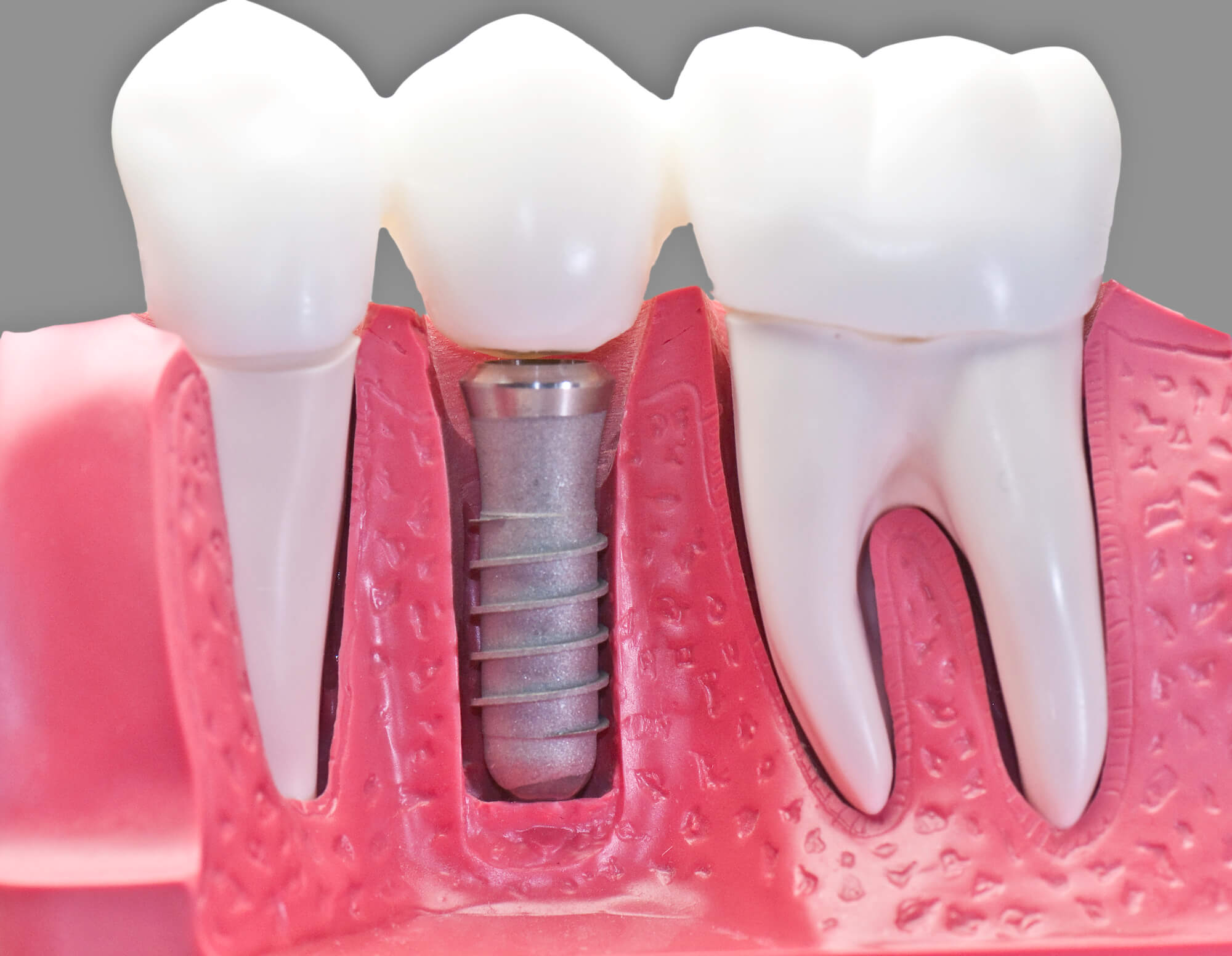
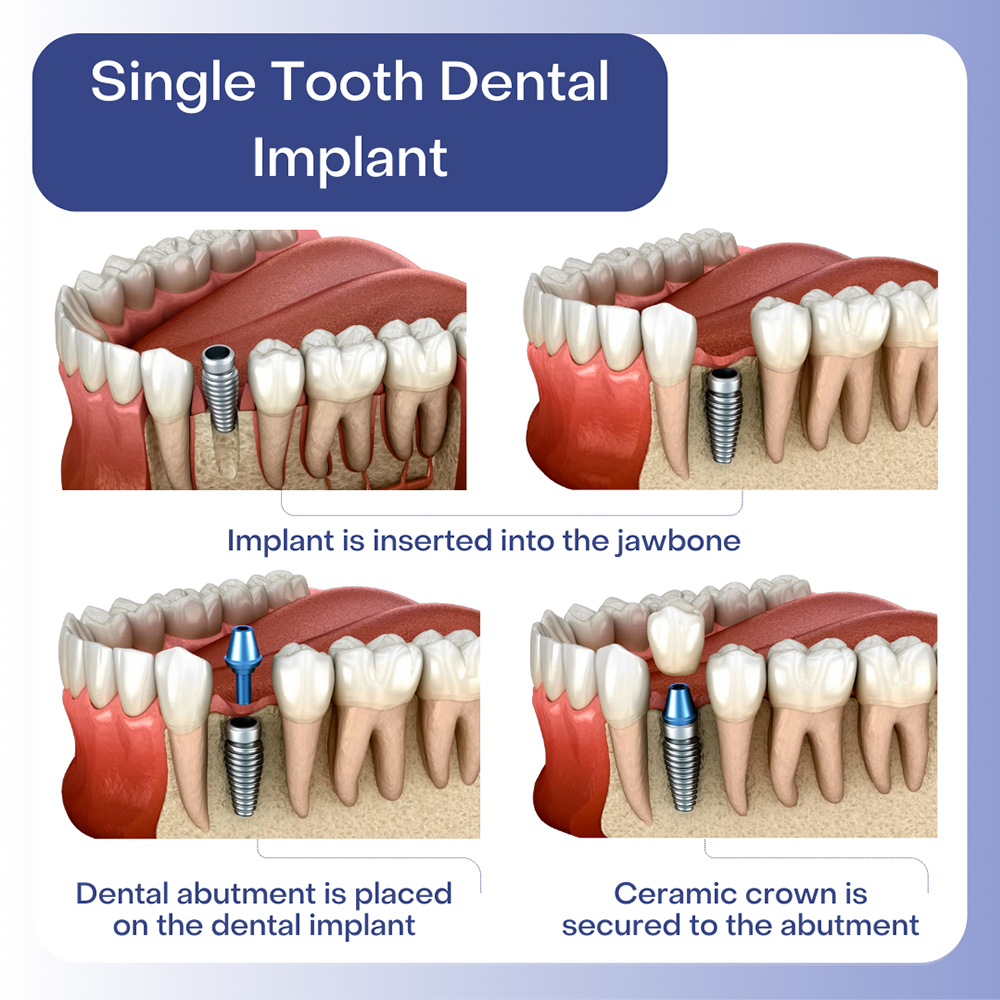
A dental implant is a three-part system, not a single piece. Understanding the components helps you understand why the procedure unfolds the way it does.
- The implant post is a small titanium screw, typically 3-5mm in diameter and 8-16mm long, that is placed into the jawbone. Titanium is used because it is biocompatible: the bone recognizes it as safe and gradually fuses to the surface of the post. This fusion process, called osseointegration, is what gives the implant its stability. A well-integrated implant can withstand the same forces as a natural tooth root.
- The abutment is a small connector piece that attaches to the top of the post after integration is complete. It sits just above the gumline and serves as the anchor point for the final restoration.
- The crown is the visible portion, the tooth you actually see and use. It is custom-made from porcelain or zirconia to match the color, shape, and size of your surrounding teeth. When the crown is seated on the abutment, the result looks and functions like a natural tooth. You brush it, floss it, and use it to eat exactly as you would your own teeth.
This is fundamentally different from a denture, which rests on the gum surface and relies on adhesive or suction, or a bridge, which requires grinding down healthy neighboring teeth to create anchor points. If you want to understand how dental implants compare to bridges or dentures, those differences in design explain why implants last decades longer and preserve more of your natural bone and tooth structure.
The Step-by-Step Process at Jupiter Dentistry
The implant process is not a single appointment. It unfolds in stages, each of which serves a specific purpose. Here’s what the process typically looks like from start to finish at our Jupiter, FL practice.
Initial Consultation and Imaging
Before anything happens, our team takes a full set of digital X-rays and, in most cases, a cone beam CT scan. This three-dimensional image shows your bone volume, bone density, the position of nerves and sinuses, and exactly where an implant can be safely placed. This imaging step is what allows us to plan the procedure precisely rather than making decisions in the chair.
We also review your medical history, medications, and habits like smoking at this stage. These factors affect healing and integration, and we take them seriously when building your treatment plan. If you want to know ahead of time whether your health history puts you in the clear, our page on dental implant candidates covers the key qualifications in detail.
Preparatory Procedures (If Needed)
Some patients require bone grafting before an implant can be placed. If you’ve had a missing tooth for a significant period or lost bone due to gum disease, there may not be enough volume to support a post. In that case, a graft is placed to rebuild the bone. This adds time to the overall process, typically several months of healing, but it creates the foundation the implant needs to succeed. Our team explains the full details of bone grafting for dental implants if this step applies to your case.
Implant Placement Surgery
The implant post is placed during a surgical appointment under local anesthesia. For patients with dental anxiety, we also offer sedation dentistry with dental implants to keep the experience comfortable from start to finish. The procedure itself typically takes one to two hours, depending on how many implants are being placed. A small incision is made in the gum, the post is inserted into the prepared site in the bone, and the gum is sutured closed around it.
Most patients describe the experience as far less uncomfortable than they anticipated. Mild soreness and swelling for a few days after is normal and manageable with over-the-counter pain relief.
Osseointegration
After placement, the titanium post bonds to the surrounding bone over a period of three to six months. This cannot be rushed. The bone cells need time to grow into the microscopic surface texture of the implant. During this phase you’ll have a temporary restoration in place so there’s no visible gap, and you’ll return for periodic checkups so our team can monitor integration progress.
Abutment Placement
Once osseointegration is confirmed, a small second procedure attaches the abutment to the post. In some cases, this is done at the time of the original surgery. Your gum tissue then heals around the abutment over a few weeks.
Final Crown Placement
Impressions or a digital scan of your mouth are taken so the lab can fabricate a custom crown. When it’s ready, the crown is attached to the abutment and adjusted to fit your bite. This is the appointment where patients most often say they can’t believe how natural it looks and feels.
What Life With Dental Implants Actually Looks Like
Once your implants are placed and integrated, maintenance is straightforward. You brush and floss normally. There are no adhesives, no removal at night, no dietary restrictions beyond what you’d follow with natural teeth. Most patients stop thinking about their implants within a few months of having the crown placed because they simply don’t feel any different from real teeth.
The longevity of an implant depends largely on how well you care for your gum tissue. The implant post itself is titanium and won’t decay. But the tissue around it can develop a condition called peri-implantitis, an inflammation similar to gum disease, if plaque accumulates at the gumline. Regular professional cleanings and good home hygiene are the primary protection against this. For patients who want to understand the risks and prevention strategies, our post on peri-implantitis solutions is worth reading.
With proper care, implant posts routinely last 25 years or more. Many last a lifetime. The crown on top typically lasts 10-15 years before it may need replacement, which is a simpler and less costly procedure than the original placement.
Frequently Asked Questions
What is the difference between All-On-4 and traditional dental implants?
Traditional implants replace individual teeth: one post per missing tooth. All-On-4 is a full-arch solution where four strategically placed implants support a complete set of upper or lower teeth. It’s designed for patients who are missing all or most teeth in an arch. The angled placement of the rear implants maximizes the use of available bone, often allowing patients to avoid bone grafting. Many All-On-4 patients leave with a full set of functional teeth the same day as surgery.
How do I know which type of implant is right for me?
That depends on how many teeth you’re missing, your bone volume, your budget, and your goals. There are multiple implant systems, restoration types, and configurations, from single-tooth implants to implant bridges to full-arch solutions. Our team at Jupiter Dentistry walks through all of these options at your consultation. Before your appointment, our post on the types of dental implants available can help you walk in with a solid baseline understanding.
Getting Dental Implants at Jupiter Dentistry
Dental tourism might look like a way to cut costs, but implant complications, failed integration, improperly fitted crowns, and infections are significantly harder to address when your provider is thousands of miles away. Local care means you can come in promptly if something needs attention during the healing phase. Our patients from Jupiter, Tequesta, Palm Beach Gardens, and surrounding communities are able to see us quickly if any concerns arise. The relationship and continuity of care matter when you’re committing to a multi-stage process.
Ready to take the next step? Call Jupiter Dentistry at (561) 575-5599 to schedule a complimentary consultation. Our team is here to answer your questions, review your imaging, and help you understand exactly what’s possible for your smile.