
Fear of pain is the number one reason people in Jupiter put off All-On-4® dental implants, even when they’ve spent years struggling with failing teeth, loose dentures, or the embarrassment of a smile they’ve stopped showing. If you’ve been searching “Are All-On-4 dental implants painful?” at 11 p.m., you’re not alone. Almost every patient who walks through our doors asks the same question before they do anything else.
The honest answer? There is some discomfort, but most patients are surprised by how manageable it is. And with the sedation options available at Jupiter Dentistry, many patients feel little to nothing during the procedure itself. Here’s a complete, no-fluff breakdown of what the All-On-4® experience actually feels like, from the chair to full recovery.
What Actually Happens During All-On-4® Surgery
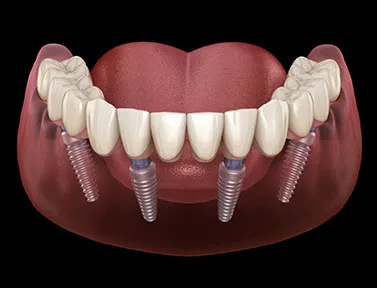
Before we talk about pain, it helps to understand what’s happening during the procedure. All-On-4® dental implants use four titanium posts placed strategically in your jawbone, two in the front and two angled toward the back, to support a full arch of replacement teeth. The angled placement is what makes All-On-4® so efficient: it maximizes contact with available bone without requiring bone grafting in most cases.
During surgery, local anesthesia fully numbs the treatment area. Most patients feel pressure and movement rather than sharp pain. The procedure typically takes two to four hours per arch. Because you’re sedated and numb, most people are surprised by how little they actually feel.
The implants are placed, any remaining failing teeth are extracted during the same visit, and a temporary set of teeth is attached that same day. You leave with a functional smile, which is what makes the All-On-4® procedure so remarkable compared to older methods that required months of waiting.
You Don’t Have to Feel a Thing Because Sedation Makes All the Difference
This is where a lot of anxiety disappears. Jupiter Dentistry offers sedation options specifically designed for patients undergoing implant surgery. Whether you’re worried about pain, dental anxiety, or simply the length of the procedure, sedation puts you in a calm, comfortable state throughout.
Here’s a look at the sedation levels available:
- Mild oral sedation — A pill taken before the appointment that relaxes you deeply while keeping you conscious. Most patients remember very little of the procedure.
- IV sedation — Administered directly into your bloodstream for faster, deeper sedation. You’ll be in a twilight state with little to no memory of the surgery. This is the most common choice for longer All-On-4® procedures.
- Nitrous oxide — A lighter option that takes the edge off anxiety and wears off quickly, so you can drive home sooner.
For a procedure as significant as All-On-4®, we generally recommend IV sedation or oral sedation. You’ll still receive local anesthesia to numb the surgical site — sedation handles the anxiety and awareness, while local anesthetic handles sensation. It’s a powerful combination that our Jupiter patients consistently find far more comfortable than they expected.
If dental anxiety has kept you from exploring this treatment, learn more about sedation dentistry with dental implants and how we tailor the approach to each patient’s comfort. You can also review our full range of sedation options to find what best fits your needs.
The First 72 Hours After Surgery: What to Expect
The first three days after All-On-4® surgery are the most uncomfortable part of the entire process. Once your anesthesia wears off, usually a few hours after you get home, you’ll notice soreness, swelling, and tenderness in your jaw. This is completely normal.
Here’s a general timeline of what most patients experience:
- Day 1: You’ll feel groggy from sedation and sore as the numbing wears off. Swelling begins. Ice packs and prescription pain medication manage most discomfort. Most patients rest at home and feel surprisingly okay.
- Days 2–3: Swelling peaks. This is typically when discomfort is at its highest. Over-the-counter ibuprofen, prescription medication, and a soft diet keep things manageable. Most patients describe this stretch as “sore but very doable.”
- Days 4–7: Swelling starts to decrease noticeably. Many patients return to light activity. Discomfort drops to a mild tenderness rather than actual pain.
- Week 2 and beyond: Most patients return to their normal routine. Soft foods are still recommended during osseointegration, the period when implants fuse with the jawbone, but daily life feels largely normal.
We give every patient detailed aftercare instructions and our direct contact information. If anything feels off during your recovery, we’re reachable; that’s part of what makes receiving this care close to home in Jupiter, FL so valuable. You’re not navigating recovery on your own.
Bone Grafting, Extractions, and Why Your Case May Be Unique
One factor that affects recovery is whether you need additional procedures alongside your All-On-4® placement. Some patients arrive with teeth that need extraction first. Others may have significant bone loss that requires a bone graft before implant placement.
Because All-On-4® uses angled implants in the back, most patients do NOT need bone grafting. Even patients with moderate bone loss in the Jupiter area are often excellent candidates. We use 3D cone beam imaging at your consultation to know for certain.
If extractions are needed, which is common for patients transitioning from failing natural teeth or ill-fitting dentures, those happen during the same surgical visit. One anesthesia event. One recovery period. Not multiple procedures spread across many months.
Wondering if you qualify? Our page on dental implant candidates walks through exactly what factors we evaluate before recommending All-On-4®.
Long-Term Reality: Why Patients Say the Discomfort Was Worth It
Here’s what the pain conversation often leaves out: the alternative. For most All-On-4® patients in Jupiter, the choice isn’t between “comfortable teeth” and “implant surgery.” It’s between years of chronic discomfort from failing teeth or ill-fitting dentures, and a few days of manageable post-surgical soreness followed by a permanent solution.
Patients who have lived with loose dentures describe the embarrassment of slipping appliances, difficulty eating at restaurants, and a quiet loss of confidence that affects every social situation. Patients with failing teeth describe ongoing toothaches, infections, and the anxiety of knowing each bite might break something.
After All-On-4®, those problems go away. Patients eat what they want: steak, corn on the cob, fresh mango from the Jupiter Farmers Market. They laugh without covering their mouth. They stop dreading social events. The short-term recovery is the trade-off for decades of freedom, and nearly every patient we treat in Jupiter tells us it was worth it.
Tips for Minimizing Discomfort During Your All-On-4® Recovery
Recovery is a team effort. What you do in the days after surgery has a meaningful impact on how you feel and how quickly you heal. Here’s what our Jupiter patients find most helpful:
- Use ice packs for the first 24 hours — Apply for 20 minutes on, 20 minutes off during the first day to keep swelling under control. After 24 hours, switch to warm compresses if swelling persists.
- Stay on top of your medication schedule — Don’t wait until pain peaks to take your medication. Taking it on the prescribed schedule keeps discomfort at bay more effectively than taking it reactively.
- Keep your head elevated — Sleeping with your head slightly elevated for the first few nights reduces blood pressure around the surgical site and minimizes throbbing discomfort.
- Rinse gently with warm salt water — Starting the day after surgery, gentle saltwater rinses several times a day keep the surgical area clean without disturbing healing tissue.
- Stick to the soft food diet — This isn’t just about comfort — it protects the implants during the critical early integration period. Soft foods reduce pressure on the surgical sites while your jaw heals.
- Avoid smoking and alcohol — Both significantly impair healing and increase the risk of complications. If there’s ever a time to take a break, this is it.
- Rest the first 48 hours — Your body heals faster when you’re not pushing it. Most patients in Jupiter take two to three days off work, then return feeling significantly better.
Frequently Asked Questions About All-On-4® Pain and Recovery
Will I be awake during All-On-4® surgery?
You can be, but most patients choose not to be. With IV sedation, you’ll be in a deeply relaxed twilight state with little to no memory of the procedure. You’ll be monitored throughout and technically able to respond, but you won’t experience the anxiety or awareness of being fully awake. Local anesthesia also ensures the surgical site is completely numb, regardless of your sedation level.
How long does All-On-4® pain last?
The most noticeable discomfort typically lasts three to seven days. Swelling peaks around days two to three, then decreases steadily. By the end of the first week, most patients are comfortable on over-the-counter pain relievers. Mild residual soreness may continue for two to four weeks as implants integrate with the bone, but it generally doesn’t interfere with daily life.
What pain medication will I need after All-On-4®?
We typically prescribe a short course of prescription pain medication for the first few days post-surgery, along with an antibiotic to prevent infection. After that, most patients transition to ibuprofen or acetaminophen. We tailor aftercare recommendations to your specific procedure, health history, and pain tolerance.
Take Your First Step Toward a Full Smile
Ready to take the next step? Call Jupiter Dentistry at (561) 747-7272 to schedule your All-On-4® consultation. We’ll walk you through the procedure, your sedation options, and exactly what to expect, so you can move forward with confidence instead of fear.